Agronomist notebook: Rains are here, watch out for grey mould in tomatoes
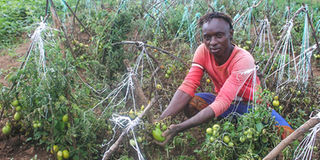
Philomon Endong'a on his tomato farm in Mosop, Nakuru County. Botrytis affects all the above-ground parts of tomatoes in both greenhouse and open field. PHOTO | FILE | NATION MEDIA GROUP
Botrytis affects all the above-ground parts of tomatoes in both greenhouse and open field. This fungus occurs as both a pathogen and a saprophyte.
Gray mould is favoured by cool and humid conditions that stress the plants, making them susceptible to the disease.
To minimise incidents of transmission of the disease from an open field to the greenhouse, farmers should avoid planting tomatoes or susceptible crops outside the structure.
Cut infected stems of dead plants to prevent the build-up of spores and the spread of infection. Remove all plant debris from the previous crop as this acts as a host to the grey mould and hence infecting the next crop.
The ongoing rains in various parts of the country have increased disease infestations in crops, raising production costs for farmers. The worst affected are tomato growers, who have seen the humid conditions severely affect the crops.
John, a farmer in Baringo, called me the other day, noting his tomato fruits had turned whitish and soft upon touch and some had ruptured skin near the centre of the decayed area.