Mukau will put cash in your pocket and food on the table
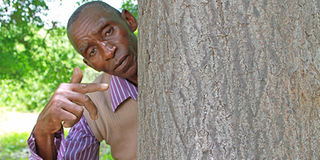
Jonathan Kituku who grows the Melia volkensii (mukau) in Makueni poses next to one of the 17,000 trees that he has grown. Its wood is easily worked and shaped, making it suitable for making acoustic drums, containers and mortars and is decay-resistant. PHOTO | FILE | NATION MEDIA GROUP
Apart from its quality timber, mukau’s other benefits include offering medicine, fodder, fuel wood, bee forage and manure.
It is used for mulching and intercropping and it controls soil erosion.
Mukau’s leaves are used on the skin of goats to control ticks and fleas.
Kefri has also attempted to raise mukau through stem cuttings and tissue culture with limited success.
Melia volkensii is indigenous to Africa’s arid and semi-arid lands. Common in Ethiopia, Kenya, Somalia and Tanzania, it is sometimes referred to as the African mahogany because of its hard and expensive wood.
In Kenya, it grows in Kitui, Machakos, Embu, Taita-Taveta, Samburu, Isiolo, Makueni, Marsabit and Mandera counties.