Vet on call: To cull or not to cull cow? All the points to consider
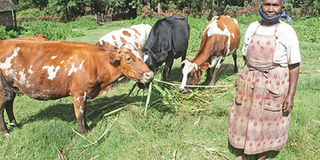
Veronicah Njoki Kariuki, a dairy farmer in Elburgon, Nakuru County feeds her dairy cows on her farm. Due to the importance of dairy farming, animal health and production scientists have over time determined key factors that indicate the potential for high milk yield if all management and nutrition parameters are kept constant. PHOTO | JOHN NJOROGE | NATION MEDIA GROUP
The animal provided him with a lot of comfort as he would go to the cowshed after work and call Emma. The cow would come to the feeding line and stroke her head against the farmer’s hand and also lick his palm.
It was such a lovely animal-human friendship. The farmer told me to advise the butcher to pick the animal when he was not at home.
Before embarking on the exercise, I briefed the farmer on my 10-point criteria for selecting the cows to remain in the herd and those to exit.
The figures actually vary based on the management of the animals. In fact, in Kenya, the average production is way below these figures because most dairy cattle are poorly managed.
I normally understand when farmers say they get sentimentally attached to their dairy cows. It is difficult to remove a healthy cow from the herd, especially when the farmer has been calling the animal by its name with good response.
I recall a farmer who had about 100 dairy cows all with female names. He chose names according to the communities that lived in the area where he bought the animals.